
Social media does not need to become an always-on emergency. For most small teams, the goal is not to post the most. The goal is to show up consistently enough that prospects, donors, partners, and community members can understand what you do and trust that your organization is active.
Pew Research Center's social media research shows that online platforms remain a major part of how adults connect, share information, and encounter content. For organizations, that means social media still plays a practical role in visibility, but it needs structure.
Build around four content pillars.
A manageable social media rhythm starts with a small set of repeatable categories. Four is usually enough: educate, prove, update, and invite.
Educational posts explain a topic. Proof posts show results, testimonials, process, or credibility. Update posts keep people aware of what is happening. Invitation posts ask the audience to take a next step.
Use a monthly calendar that repeats your strongest message pillars instead of inventing a new strategy every week.
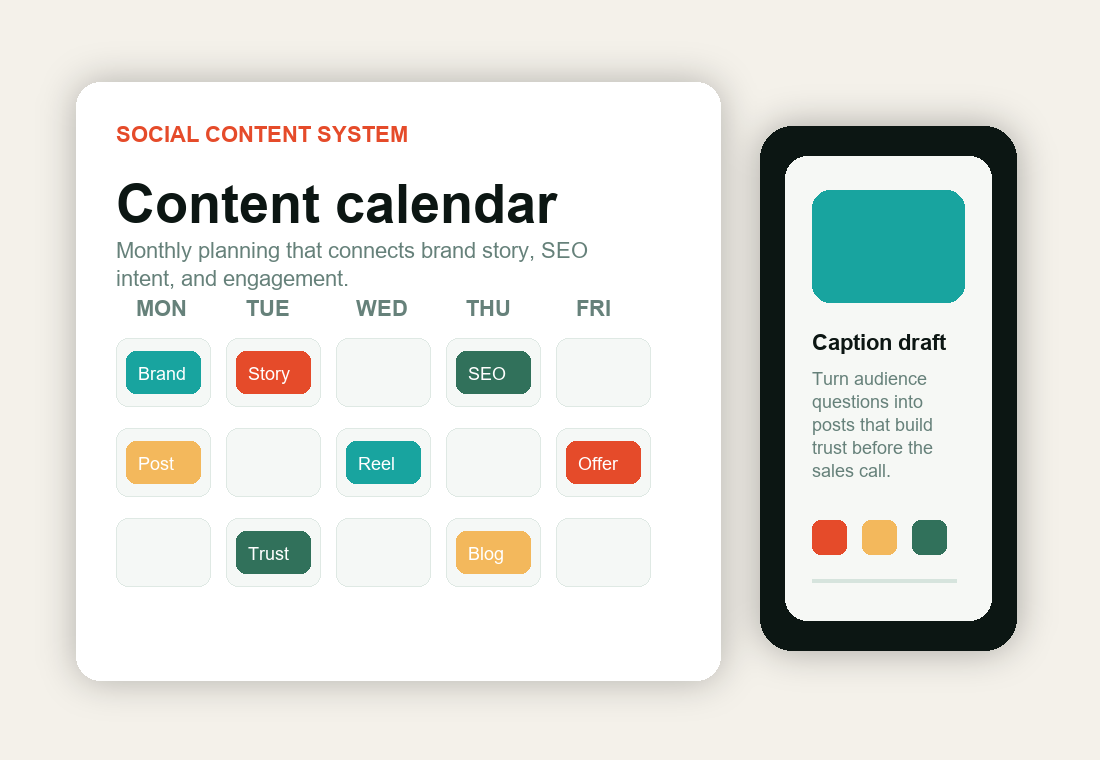
Plan in batches, then schedule with care.
Meta's official help resources explain how Page posts can be created and scheduled. For small teams, scheduling is not just a convenience; it protects the organization from last-minute publishing pressure.
A simple workflow can be enough: decide the monthly theme, draft captions in batches, prepare visuals, approve the calendar, schedule posts, and leave room for timely updates.
Use engagement as a learning signal.
Meta for Business notes that Page insights can help show which posts people engage with. That does not mean every post should chase the same metric. A credibility post, a campaign update, and a meeting invitation may each serve different goals.
The useful question is: what did this post help people understand or do?
Track important links with campaign URLs.
Social media teams often know what they published but not what happened afterward. Google's Analytics Help explains that campaign URLs with UTM parameters can identify which campaigns refer traffic. For posts that point to a donation page, booking page, event page, or service page, clean tracking links can make reporting much more useful.
At minimum, campaign links should be consistent enough that your team can compare channels, campaigns, and calls to action without guessing.
A weekly rhythm that works for many small teams
- One educational post that answers a real audience question.
- One proof or credibility post that shows why your organization can be trusted.
- One update post that keeps the audience close to current work.
- One invitation post with a clear next step.
- One short review of comments, messages, link clicks, and next actions.
FAQ
Common social media planning questions
How often should a small team post on social media?
Choose a rhythm your team can maintain with useful content. For many small teams, two to four thoughtful posts per week is more sustainable than daily publishing.
Should the same post be used on every platform?
The central idea can stay consistent, but the format, length, and call to action should fit how people use each platform.
What should a monthly social media report include?
Review reach, engagement, useful link clicks, audience questions, top-performing message themes, and one or two practical changes for the next month.